Hey there! I’m an alumina supplier, and I’ve been in this industry for quite some time. You know, there’s a lot of buzz these days about how alumina interacts with nanoparticles. So, I thought I’d share some insights from my years of experience and the latest research I’ve come across. Alumina
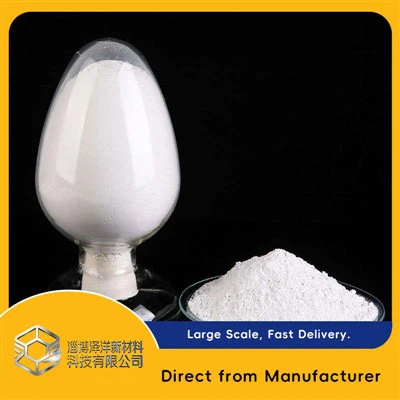
First off, let’s talk a bit about what alumina and nanoparticles are. Alumina, or aluminum oxide, is a super versatile material. It’s hard, wear – resistant, and has great thermal and electrical insulation properties. That’s why it’s used in so many industries, from electronics to ceramics and even in some high – tech medical applications.
Nanoparticles, on the other hand, are tiny particles with at least one dimension in the nanoscale (less than 100 nanometers). They have unique physical and chemical properties compared to their bulk counterparts because of their high surface – to – volume ratio. This makes them really interesting for a whole range of applications, like drug delivery, catalysis, and advanced materials.
So, how do these two interact? Well, one of the main ways is through surface adsorption. Nanoparticles can stick to the surface of alumina particles. This is because the surface of alumina has a lot of active sites, like hydroxyl groups. These groups can form weak chemical bonds or physical interactions with the nanoparticles. For example, if we’re talking about metal nanoparticles, they might interact with the oxygen atoms on the alumina surface through electrostatic or van der Waals forces.
This surface adsorption can have a big impact on the properties of both the alumina and the nanoparticles. For the alumina, the presence of nanoparticles on its surface can change its surface reactivity. It might make the alumina more catalytically active, for instance. If you’re using alumina as a catalyst support, the adsorbed nanoparticles can act as the active catalytic sites.
For the nanoparticles, the alumina can stabilize them. Nanoparticles have a tendency to agglomerate because they’re so small and have high surface energy. But when they’re adsorbed on the alumina surface, the alumina acts like a physical barrier, preventing the nanoparticles from coming together and sticking. This is really useful in applications where you need well – dispersed nanoparticles.
Another way alumina and nanoparticles interact is through chemical reactions. In some cases, the alumina can react with the nanoparticles to form new compounds. For example, if you have some metal oxide nanoparticles and you heat them up with alumina under certain conditions, they might react to form a spinel – type compound. Spinels are a class of materials that can have really interesting magnetic, electrical, and optical properties.
The reaction between alumina and nanoparticles also depends on a few factors, like the type of nanoparticles, the temperature, and the atmosphere. For instance, if you’re working with reducing atmospheres, the reaction might be different compared to an oxidizing atmosphere.
Now, let’s talk about some real – world applications of these interactions. In the field of catalysis, as I mentioned earlier, alumina – supported nanoparticles are widely used. For example, in the petroleum industry, catalysts made of alumina with metal nanoparticles are used to convert crude oil into more useful products like gasoline and diesel. The alumina provides a stable support for the nanoparticles, and the nanoparticles do the actual catalytic reaction.
In the field of nanocomposites, the interaction between alumina and nanoparticles is used to create materials with enhanced properties. For example, if you add some nanoparticles to an alumina matrix, you can improve its mechanical properties. The nanoparticles can act as reinforcement, making the material stronger and more resistant to cracking.
In the medical field, the interaction between alumina and nanoparticles has potential applications in drug delivery. You can attach drug – loaded nanoparticles to alumina particles, and then use the alumina as a carrier to deliver the drugs to specific cells in the body.
As an alumina supplier, I’ve seen a growing demand for alumina that’s suitable for interacting with nanoparticles. Customers are looking for high – purity alumina with a specific surface area and pore size distribution. This is because these properties affect how well the alumina can adsorb and interact with the nanoparticles.
If you’re in an industry that could benefit from the interaction between alumina and nanoparticles, I’d love to talk to you. Maybe you’re working on developing a new catalyst, or you’re looking to improve the properties of your nanocomposites. I can provide you with high – quality alumina that’s tailored to your specific needs. Whether you need alumina with a high surface area for better nanoparticle adsorption or alumina with a specific crystal structure for a particular chemical reaction, I’ve got you covered.

If you’re interested in learning more or want to start a purchase negotiation, don’t hesitate to reach out. We can discuss your requirements in detail and come up with the best solution for your project.
High-purity Alumina References
- Cushing, B. L., Kolesnichenko, V. L., & O’Connor, C. J. (2004). Recent advances in the liquid – phase syntheses of inorganic nanoparticles. Chemical Reviews, 104(9), 3893 – 3946.
- Polarz, S., Pinna, N., & Antonietti, M. (2006). Metal oxide nanoparticles in organic solvents: Syntheses, functionalizations, and applications. Angewandte Chemie International Edition, 45(42), 7396 – 7406.
- Zhang, X., & Lin, Y. (2011). Advances in supported metal nanoparticles: synthesis, characterization, and applications in heterogeneous catalysis. Journal of Chemical Sciences, 101(6), 787 – 802.
Shandong Leipu New Material Technology Co., Ltd.
With abundant experience, we are one of the most professional alumina manufacturers and suppliers in China. Please feel free to buy high quality alumina for sale here and get quotation from our factory. For price consultation, contact us.
Address: Advanced Ceramic Industry Innovation Park, No. 125, Liuquan Road, High-tech Zone, Zibo City, Shandong Province
E-mail: 2330389088@qq.com
WebSite: https://www.sdleipu.com/
