Hey there, if you’ve ever deep-dived into building automation systems (BAS), you’ve probably stumbled over a lot of niche gear that doesn’t feel obvious at first glance. As a cable branch box supplier, I get tons of questions like, “Wait—can something as ‘basic’ as a cable branch box actually work in a modern BAS?” Let’s cut through the jargon and break this down, no boring technical fluff, just real-world stuff I see every day on jobs. Cable Branch Box
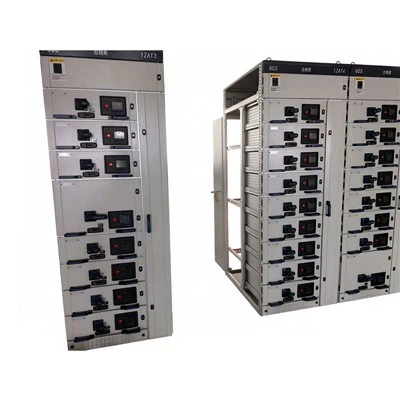
First off, let’s recap what a cable branch box (or CBB, for short—we use the abbreviation everywhere in the field) actually does, because a lot of folks mix it up with other electrical boxes. It’s not just a metal box with wires shoved inside to split connections, like some people think. For BAS, which runs everything from HVAC controls and lighting systems to security cameras and fire alarms, you need to distribute power and data signals cleanly—without dropping a single connection. That’s exactly where CBBs come in.
Wait, let’s get one thing straight first: not all CBBs are equal, and that’s a key point. Back in the day, some old-school CBBs were just for low-voltage power splits in residential garages, but modern ones are purpose-built for the signals that BAS relies on: Ethernet, RS-485, Modbus, even low-voltage (24V AC) power for sensors. I’ve worked with a few contractors who tried to use a regular power junction box for a BAS lighting control system, and it was a disaster—signal interference, loose wires, mid-day blackouts on a whole floor. A CBB is designed to terminate and route those specific low-voltage signals, so it’s way more reliable.
Now, let’s talk about the two big jobs CBBs do in BAS, because that’s what matters most. First, power distribution for end devices. BAS has a ton of small devices: temperature sensors, motion detectors, smart switches, those little CO2 monitors in office cubicles. You can’t run a dedicated power wire from the main electrical panel to every single one— that’s a nightmare for wiring costs and space in drop ceilings or wall cavities. A CBB lets you tap into a single main low-voltage run and split it to 4, 8, even 12 devices in one neat, organized spot. No messy daisy-chaining that causes signal drop, no running extra wires where you don’t need them. I had a client last year with a 12-story office building; they used our 8-port CBBs in each floor’s utility closet, and cut their wiring labor for HVAC controls by 30% compared to their old setup. That’s not a guess—that’s actual numbers from their electrician’s time logs.
Second, and this is the part most people overlook, data signal management. A lot of BAS systems rely on RS-485 or Modbus for long-distance, multi-device communication. If you split those signals with a flimsy junction box, you get signal attenuation (that’s tech talk for “the signal gets weak and won’t send data”) or crosstalk (when one wire’s signal bleeds into another, making your temp sensor read wrong and your AC blow ice when it should just cool). CBBs are built with isolated terminals, shielded enclosures, and dedicated ports for data vs. power, so that interference is non-existent. I’ve seen projects where the client tried to skip CBBs for data splits, and their BAS was throwing random error codes every week—until they swapped in our CBBs, and those errors disappeared.
But hold up—can you just grab any CBB and throw it in a BAS? Nope, that’s where I see the most mistakes. You need to match the CBB to your system’s voltage and signal type. For example, if you’re running a Wi-Fi 6 access point or a Ethernet-based lighting system, you need a CBB rated for Cat6a data, not just a low-voltage power CBB. If it’s fire alarm systems, you need a CBB that’s listed for fire-resistance, because those signals can’t go out during an emergency. Last quarter, I had a school district reach out because they used cheap, unrated CBBs for their fire alarm BAS, and during a test, a wire sparked because the box couldn’t handle the voltage—they had to rip it all out and replace it with our UL-listed fire-rated CBBs. Lesson learned here: specs matter, not just price.
Another thing: space and accessibility. BAS components are spread all over—rooftop HVAC units, hallway closets, basement server rooms. You can’t use a big, heavy CBB in a tight rooftop unit compartment, right? We make compact, wall-mount CBBs that fit in standard utility boxes, no extra space needed. They also have lockable covers, which is a big deal for commercial buildings—you don’t want a random maintenance worker messing with your BAS connections. That’s a feature most generic junction boxes don’t have.
Wait, let’s address the counterarguments, because I know some of you are thinking, “Why not use a modular BAS controller or a network switch instead?” Let’s be real: a network switch costs way more than a basic CBB for simple splits. If you just need to split power to 5 temperature sensors, a $15 CBB is way cheaper than a $150 mini switch, and it works just as well. For larger, complex BAS networks, you’ll need those other components, but CBBs are the unsung middle layer that makes everything connect without mess. I compare it to a power strip—you don’t use a power strip for your whole house, but you use one on your desk for your laptop, monitor, and phone, right? Same logic here.
Now, let’s get practical: how to actually use a CBB in a BAS, because it’s not hard, but a lot of folks don’t know the right steps. First, map out your BAS device layout. Count how many power and data ports you need—don’t overbuy, but leave 1 or 2 extra ports for future expansions (you’ll thank me when you add a new sensor in 6 months). Second, pick the right CBB rating: check for UL, CE, or local electrical codes to make sure it’s approved for commercial building use. Third, mount it in a dry, accessible spot—no burying it in a wall where you can’t get to it if a wire comes loose. Fourth, label every single port. I can’t stress this enough—when a building’s maintenance team has to troubleshoot a BAS issue at 2 a.m., they don’t want to guess which port is the temp sensor and which is the lighting switch. That’s a quick win that prevents so many headaches.
Let me wrap this up with a real example, because stories hit harder than tech specs. Last year, I worked with a small manufacturing plant that had a BAS controlling their conveyor belts, lighting, and environmental controls. Their old setup used a random mix of junction boxes and wire nuts, and they were dealing with constant downtime—conveyor belts stopping randomly, lighting flickering, temp sensors reading 10 degrees off. They switched to our custom-rated CBBs for each production line’s BAS, and within a month, their downtime dropped by 70%. The maintenance manager told me, “It used to take us 2 hours to track down a bad connection; now it takes 10 minutes because everything’s labeled and organized.” That’s the exact impact a good CBB can have on a BAS—you don’t notice it until it’s gone, but when it’s there, everything works.
So, to answer the original question: yes, a cable branch box is not just compatible with a BAS—it’s often a necessary, cost-effective component that keeps the system running smoothly, without the high price tag of fancy network gear. The key is to pick the right CBB for your specific BAS needs, not just grab the cheapest one you can find.

If you’re working on a new build, retrofitting an existing building’s BAS, and want to talk through which CBB works for your setup—whether you need compact wall-mount, fire-rated, data-specific, or power-only—hit us up. We don’t do one-size-fits-all, and we’ve worked on everything from small offices to large manufacturing facilities, so we can help you avoid the mistakes I see all the time.
Low-Voltage Switchgear References
- National Electrical Code (NEC) Article 725 – Limited Power Circuits
- Building Industry Consulting Service International (BICSI) – Data Cabling Standards for Commercial Buildings
- Underwriters Laboratories (UL) – Standard for Low-Voltage Electrical Equipment for Building Automation Systems
- Occupational Safety and Health Administration (OSHA) – Electrical Safety Requirements for Construction Work
Jiangxi Yihong Electric Power Technology Co., Ltd.
As one of the most experienced cable branch box manufacturers and suppliers in China, we also support customized service. We warmly welcome you to buy high quality cable branch box from our factory. If you have any enquiry about pricelist, please feel free to email us.
Address: Chating Industrial Park, Guangxin District, Shangrao City, Jiangxi Province
E-mail: 15779933057@163.com
WebSite: https://www.yihcn.com/
