In the dynamic realm of manufacturing, high – speed drilling and tapping centers play an indispensable role. These sophisticated machines are the backbone of various industries, from automotive to electronics, enabling precision machining at remarkable speeds. However, the intense operation of high – speed drilling and tapping centers generates a significant amount of heat, which, if not properly managed, can lead to a host of problems. As a supplier of high – speed drilling and tapping centers, I am well – versed in the importance of effective heat dissipation methods, and in this blog, I will delve into the various techniques used to keep these machines cool and running efficiently. High Speed Drilling and Tapping Center
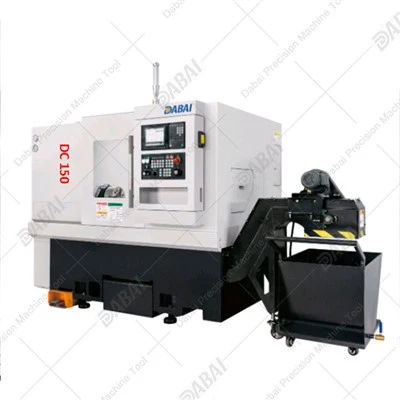
The Significance of Heat Dissipation in High – Speed Drilling and Tapping Centers
Before we explore the heat dissipation methods, it is crucial to understand why heat management is so vital for high – speed drilling and tapping centers. When these machines operate at high speeds, the friction between the cutting tool and the workpiece, as well as the internal mechanical movements, generate a substantial amount of heat. Excessive heat can cause several detrimental effects.
Firstly, thermal expansion occurs. The components of the machining center, such as the spindle, the guide rails, and the cutting tools, expand when heated. This expansion can lead to dimensional inaccuracies in the machined parts, reducing the precision and quality of the final products. In industries where tight tolerances are required, even a slight deviation due to thermal expansion can render the parts unusable.
Secondly, high temperatures can accelerate the wear and tear of machine components. The heat can cause the lubricants to break down more quickly, leading to increased friction and faster deterioration of moving parts. This not only shortens the lifespan of the machine but also increases maintenance costs and downtime.
Finally, overheating can also pose a safety risk. The excessive heat can damage the electrical components of the machine, potentially leading to electrical failures or even fires. Therefore, effective heat dissipation is essential for ensuring the reliability, precision, and safety of high – speed drilling and tapping centers.
Common Heat Dissipation Methods
Air – Cooling
Air – cooling is one of the most straightforward and commonly used heat dissipation methods for high – speed drilling and tapping centers. This method relies on the circulation of air to carry away the heat generated by the machine.
There are two main forms of air – cooling: natural convection and forced convection. Natural convection occurs when the heat causes the air around the machine to expand and rise, creating a natural airflow that carries the heat away. However, natural convection is relatively slow and may not be sufficient for high – speed drilling and tapping centers, which generate a large amount of heat in a short period.
Forced convection, on the other hand, uses fans or blowers to increase the airflow around the machine. The fans draw in cool air from the surroundings and blow it over the hot components, such as the spindle motor and the control cabinet. As the air absorbs the heat, it is then expelled from the machine. This method is more efficient than natural convection and can effectively reduce the temperature of the machine.
Air – cooling has several advantages. It is relatively simple and cost – effective compared to other heat dissipation methods. There are no complex coolant systems or additional equipment required, which makes it easy to install and maintain. However, air – cooling also has its limitations. It is less effective in high – temperature environments, as the air may already be warm, reducing its ability to absorb heat. Additionally, air – cooling may not be sufficient for machines with high power consumption and intense heat generation.
Liquid – Cooling
Liquid – cooling is a more advanced and efficient heat dissipation method for high – speed drilling and tapping centers. This method uses a liquid coolant, usually water or a water – based solution, to absorb and transfer the heat away from the machine.
The liquid – cooling system typically consists of a coolant reservoir, a pump, a heat exchanger, and a series of tubes or channels that circulate the coolant through the machine. The pump circulates the coolant from the reservoir through the machine components, such as the spindle, the motor, and the hydraulic system. As the coolant flows through these components, it absorbs the heat and carries it to the heat exchanger.
The heat exchanger is a crucial component of the liquid – cooling system. It transfers the heat from the coolant to the surrounding air or another cooling medium. There are several types of heat exchangers, including air – cooled heat exchangers and water – cooled heat exchangers. Air – cooled heat exchangers use fans to blow air over the fins of the heat exchanger, transferring the heat from the coolant to the air. Water – cooled heat exchangers, on the other hand, use a secondary coolant, such as water, to absorb the heat from the primary coolant.
Liquid – cooling offers several advantages over air – cooling. It has a higher heat transfer coefficient, which means it can absorb and transfer heat more efficiently. This allows liquid – cooled machines to operate at higher speeds and with higher power consumption without overheating. Additionally, liquid – cooling can maintain a more stable temperature, reducing the risk of thermal expansion and improving the precision of the machining.
However, liquid – cooling also has its drawbacks. It is more complex and expensive than air – cooling. The liquid – cooling system requires additional components, such as the coolant reservoir, the pump, and the heat exchanger, which increase the cost and complexity of the machine. Furthermore, the liquid coolant needs to be regularly maintained and replaced to prevent corrosion and contamination.
Hybrid Cooling
In recent years, hybrid cooling systems have emerged as a popular solution for high – speed drilling and tapping centers. Hybrid cooling combines the advantages of both air – cooling and liquid – cooling to achieve a more efficient and reliable heat dissipation.
A typical hybrid cooling system uses air – cooling for the less heat – generating components, such as the control cabinet and the outer casing of the machine. This helps to reduce the overall heat load on the liquid – cooling system. The liquid – cooling system is then used for the critical components that generate a large amount of heat, such as the spindle and the motor.
By using a hybrid cooling system, the machine can achieve a balance between cost – effectiveness and high – performance heat dissipation. The air – cooling part of the system provides a simple and cost – effective way to remove the low – level heat, while the liquid – cooling part ensures that the critical components are kept at a stable and safe temperature.
Our Approach as a Supplier
As a supplier of high – speed drilling and tapping centers, we understand the importance of choosing the right heat dissipation method for each application. We work closely with our customers to analyze their specific requirements, such as the machining speed, the power consumption, and the operating environment.
Based on this analysis, we recommend the most suitable heat dissipation method for their machines. For customers with relatively low – power machines and less demanding operating environments, air – cooling may be a cost – effective solution. For customers who require high – speed and high – precision machining, we may recommend a liquid – cooling or hybrid cooling system to ensure optimal performance and reliability.

In addition to providing the appropriate heat dissipation methods, we also offer comprehensive after – sales support. Our team of technicians is trained to install, maintain, and repair the heat dissipation systems of our high – speed drilling and tapping centers. We also provide regular maintenance services to ensure that the cooling systems are operating at their best and to prevent any potential problems.
Contact Us for Your High – Speed Drilling and Tapping Center Needs
CNC Lathe If you are in the market for a high – speed drilling and tapping center, we invite you to contact us for a detailed discussion of your requirements. Our team of experts is ready to assist you in choosing the right machine and the appropriate heat dissipation method to meet your specific needs. We are committed to providing high – quality products and excellent customer service, and we look forward to the opportunity to work with you.
References
- "Machining Technology: Principles and Applications" by Robert L. Norton
- "Heat Transfer: A Practical Approach" by Yunus A. Cengel
- Technical reports from industry – leading high – speed drilling and tapping center manufacturers
Dabai Precision Machine Tool (Jiangsu) Co., Ltd.
As one of the most professional high speed drilling and tapping center manufacturers and suppliers in China, we’re featured by quality products and good price. Please rest assured to buy advanced high speed drilling and tapping center for sale here from our factory. We also accept customized orders.
Address: No. 66-1, Zhenhu North Road, Hudai Town, Binhu District, Wuxi City
E-mail: elaine@dabaicnc.com
WebSite: https://www.cnc-dabai.com/
