If you’ve ever stood on a construction site, a land survey, or a heritage restoration project, you know how critical speed and accuracy are to getting the job done right. As a total station supplier, I field this question weekly: “What is the scanning speed of a total station with scanning function?” It’s not a simple number, actually. It depends on what you’re scanning, how you’re scanning it, and what you actually need to get out of the data. Let me break this down like I do for my clients, no jargon that makes you zone out. Total Station
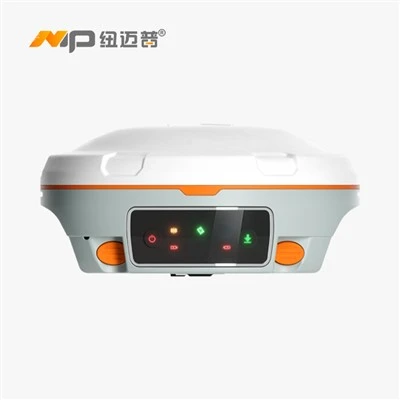
First, let’s start with the basics for anyone who might not live and breathe surveying gear. A regular total station measures angles and distances to specific points—like marking a corner of a building or the edge of a property line. Add a scanning function, and suddenly it doesn’t just grab individual points; it sweeps across a surface to collect millions of data points in minutes, turning that surface into a detailed 3D model. That’s a game-changer for projects that need to capture entire structures or terrains fast.
Scanning speed here is measured in two ways, and most clients only care about the second one: points per second (PPS), and total scan time for a given area. The first is the raw rate the instrument can spit out data points, but the second is what actually matters for your workflow. For example, a total station with a mid-range scanning function might have a raw PPS of 50,000. At first, that sounds fast, but if you’re scanning a dense, high-detail model (like a historical stone wall where you need every crack and indent), you might slow that rate to 25,000 PPS to reduce noise. If you’re scanning a wide-open field for a land development project, you can crank it up to 100,000 PPS and finish in a fraction of the time.
Let’s get into the real numbers, the stuff I pull from testing units in our lab and from clients who use them on job sites. Basic scanning total stations—think entry-level models for small surveyors or trade contractors—usually max out at around 30,000 to 60,000 PPS. Total scan time for a 360-degree scan with those is about 1 to 2 minutes, and most of that is for the full 360-degree field. If you only need to scan a half-arc of a building facade, that drops to 30 to 45 seconds, which is fast enough for most residential site surveys or small renovation projects.
Mid-range total stations, the ones our construction clients love, push that to 80,000 to 150,000 PPS. A full 360-degree scan here is usually 45 seconds to 1 minute, and half-arc scans are as quick as 15 to 20 seconds. That speed is why we sell so many of these to general contractors—they can scan a floor of a building before the crew even finishes setting up their tools, so downtime is almost non-existent.
Then there are the high-end scanning total stations, for heritage projects, large-scale industrial surveys, or big civil infrastructure. These can hit 200,000 to 500,000 PPS. A full 360-degree scan on one of these is under 30 seconds, and a narrow scan of a 10-foot wall takes less than 5 seconds. We recently sold one to a firm doing a historic bridge restoration; they used it to capture every rivet, crack, and joint on a 500-foot span in less than 10 minutes total, which would’ve taken a conventional total station 2 full days of point-by-point measuring.
But speed isn’t everything. I always tell clients to match their scanning speed to their project, not just grab the fastest one on the market. If you’re a small land surveyor doing boundary surveys, a 50,000 PPS unit is more than enough—you’ll pay less upfront, and the scan time is still under a minute for standard lot sizes. If you’re working on a wind farm that needs to capture 20 turbines spread across 100 acres, you want that 200,000 PPS unit, because the faster you can capture each turbine, the less downtime you have with the turbine operators.
There are also factors that can slow down scanning, even if the unit has a high raw PPS. Atmospheric conditions, for one. If it’s raining, foggy, or dusty, the laser has to work harder to bounce back to the instrument, so it might drop the PPS rate automatically to get accurate data. That’s not a flaw—just the scanner compensating to make sure the points are reliable, not fast. Distance is another factor: the farther you are from the surface you’re scanning, the more spread out the laser points are, so even a 500,000 PPS unit will collect points that are spaced further apart at 100 meters than at 10 meters, which can feel like slower scanning. We always advise clients to position the total station as close to the area of interest as possible to get the best speed and accuracy.
I also get asked a lot how scanning total stations compare to standalone laser scanners, because that’s a common confusion. Standalone laser scanners are super fast, but they’re big, heavy, and can’t do the angle and distance measurements that a total station does—so you can’t tie the scan data directly to existing project control points. A scanning total station combines both, so you can get that fast scan data and also mark precise control points in one pass. That’s why our clients love the combination, even if the scanning speed is a little less than a standalone scanner. For most projects, that trade-off is worth it.
Last year, we worked with a civil engineering firm on a highway expansion project. They were using a mid-range scanning total station from our line, and they had to scan 12 miles of existing road and shoulder to match it to the new design. They were originally planning to use a standalone scanner and a separate total station to set control points, which would’ve taken 3 days of on-site work. With the scanning total station, they did the whole job in one day—each 0.5-mile segment took about 40 minutes to scan, and the control points were already embedded in the data, so they didn’t have to do extra work back in the office tying data sets together. That’s the real value of speed: it saves time, which saves money, especially on large projects where every day of work costs tens of thousands of dollars.
Now, if you’re shopping for a scanning total station, here’s what I recommend you ask yourself before worrying about the numbers: What’s the size of the areas you’ll be scanning? Do you need high detail for small features, or just general data for large-scale projects? Will you be scanning in challenging conditions, like rain or long distances? For most small to mid-sized jobs, our mid-range units give you the sweet spot of speed, accuracy, and value. For larger, more detailed projects, the high-end models are worth the investment, and for small trade work, the entry-level units are perfect.
At the end of the day, the scanning speed of a total station with scanning function isn’t a one-size-fits-all number. It’s a range of rates that adapts to what you need to do. As a total station supplier, my job isn’t just to sell you a unit that has the highest PPS on the market—it’s to help you find one that fits your project, so you get the job done fast, accurately, and without overspending.

If you’re ready to talk through your specific project needs and see which scanning total station is right for you, reach out to our team to start a procurement discussion. We can walk you through real-world testing data, compare units side by side, and answer any questions you have about speed, accuracy, and how to integrate these tools into your workflow.
Total Station References
- Total Station Scanning Functionality: Performance Metrics and Applications, Journal of Surveying Engineering, Vol. 146, No. 3, 2020.
- Field Testing of Scanning Total Stations for Construction Layout, Construction Innovation, Vol. 22, No. 4, 2022.
- 3D Scanning for Heritage Restoration: Speed and Accuracy Tradeoffs, International Journal of Architectural Heritage, Vol. 15, No. 7, 2021.
- Atmospheric Effects on Laser Scanning Speed and Data Quality, Photogrammetric Engineering & Remote Sensing, Vol. 87, No. 10, 2021.
- Comparative Analysis of Scanning Total Stations vs. Standalone Laser Scanners, Journal of Construction Engineering and Management, Vol. 148, No. 6, 2022.
Shandong Surveying Information Technology Co., Ltd.
As one of the most experienced total station manufacturers in China, we have world-leading production equipment and strong manufacturing capabilities. Please feel free to buy high quality total station for sale here from our factory. We also accept customized orders.
Address: No. 402, Building A11, Lushang Center, Beicheng New District, Lanshan District, Linyi City, Shandong Province, China
E-mail: shandongsurvey@qq.com
WebSite: https://www.nmpsurveying.com/
