Hey there! I’m a supplier of self-tapping inserts, and I’ve been dealing with these nifty little components for quite a while now. One question that keeps popping up from my customers is, "How do you measure the size of self-tapping inserts?" Well, in this blog post, I’m gonna break it down for you. Self-Tapping Inserts
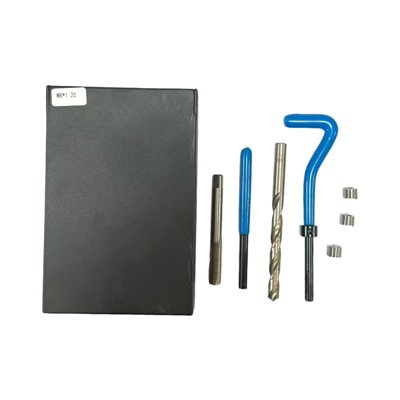
First off, let’s understand why measuring self-tapping inserts correctly is a big deal. These inserts are used in all sorts of applications, from automotive to electronics, and from furniture to machinery. If you get the size wrong, it can lead to a whole bunch of problems. The insert might not fit properly into the hole, which could cause it to loosen over time or, even worse, damage the material it’s installed in. So, getting the measurement right is crucial for a successful installation and long-term performance.
Measuring the Outer Diameter
The outer diameter (OD) of a self-tapping insert is one of the most important dimensions to measure. It determines how well the insert will fit into the pre – drilled hole in the material. To measure the OD, you’ll need a caliper. I recommend using a digital caliper because it gives you a more accurate reading, but a traditional Vernier caliper will also do the job.
Here’s how you do it. Open the jaws of the caliper and place them around the widest part of the insert. Make sure the caliper is perpendicular to the axis of the insert. Then, close the jaws gently until they touch the outer surface of the insert. If you’re using a digital caliper, the measurement will show up on the display right away. For a Vernier caliper, you’ll have to read the measurement from the scale. Take note of this measurement, as it’s a key factor in selecting the right hole size for installation.
Measuring the Length
The length of the self-tapping insert is another important dimension. It affects how deep the insert will go into the material and how much thread engagement you’ll get. Measuring the length is pretty straightforward. You can use either a caliper or a ruler.
If you’re using a caliper, open the jaws and place one jaw at the end of the insert and the other at the opposite end. Make sure you’re measuring the full length of the insert, from the top of the head (if it has one) to the tip. With a ruler, just place it next to the insert and read the measurement at the end of the insert.
It’s important to get an accurate length measurement because if the insert is too short, it might not provide enough holding power. On the other hand, if it’s too long, it could protrude through the material, which isn’t always desirable.
Measuring the Thread Pitch
The thread pitch is the distance between each thread on the self-tapping insert. This is a critical measurement because it determines how well the insert will tap into the material and how tightly it will hold.
To measure the thread pitch, you can use a thread pitch gauge. This is a handy tool that has a bunch of different notches, each corresponding to a specific thread pitch. Just match the notches on the gauge to the threads on the insert until you find a perfect fit. The number on the gauge that matches the threads is the thread pitch.
If you don’t have a thread pitch gauge, you can still estimate the thread pitch. You can use a ruler to measure the distance over a certain number of threads (say, 10 threads). Then, divide the total distance by the number of threads. This will give you an approximate thread pitch. But keep in mind, this method is not as accurate as using a thread pitch gauge.
Measuring the Inner Diameter (Optional)
In some cases, you might also need to measure the inner diameter (ID) of the self-tapping insert. This is especially important if the insert will be used for a threaded connection, like a screw or a bolt.
To measure the ID, you can use the same caliper you used for the OD measurement. Open the inner jaws of the caliper and place them inside the insert. Then, close the jaws gently until they touch the inner surface of the insert. Read the measurement on the caliper display or scale.
Factors Affecting the Measurement
Now, there are a few factors that can affect the accuracy of your measurements. For example, the surface finish of the insert can play a role. If the insert has a rough surface, it might be a bit more difficult to get an accurate measurement. Also, any damage or wear on the insert can distort the measurements. So, it’s important to inspect the insert before measuring it.
Another factor is the material of the insert. Some materials, like stainless steel, might be harder and have a more precise finish, while others, like plastic, might be softer and more prone to deformation. This can also affect the measurement results.
Common Mistakes to Avoid
There are a few common mistakes people make when measuring self-tapping inserts. One of the biggest mistakes is not using the right tool. As I mentioned earlier, using a caliper or a thread pitch gauge is the most accurate way to measure these components. Using a ruler for everything might not give you the precision you need.
Another mistake is not measuring in the right place. For example, when measuring the OD, make sure you’re measuring at the widest part of the insert. If you measure at a narrower section, you’ll get an incorrect measurement.
How Our Inserts Are Guaranteed for Accurate Sizes

As a self-tapping insert supplier, I can tell you that we take size accuracy very seriously. We use state – of – the – art manufacturing equipment to ensure that each insert is made to the exact specifications. Our quality control team checks every batch of inserts before they leave the factory. They use precision measuring tools to verify the OD, length, thread pitch, and ID (if applicable). This way, you can be confident that the inserts you receive from us will be accurately sized and will fit perfectly into your application.
Contact Us for Your Purchasing Needs
Thread Repair Kit If you’re in the market for self-tapping inserts, don’t hesitate to reach out. Whether you need standard sizes or custom – made inserts, we’ve got you covered. I’m here to answer any questions you might have about measuring our inserts or any other concerns you might have. Get in touch with us, and we’ll start a great business relationship to meet all your self – tapping insert requirements.
References
- Machinery’s Handbook, 30th Edition
- Fastener Manufacturing and Standards Committee Technical Standards
- Technical Manuals on Metalworking and Precision Engineering
Locking Inserts Technologies Co., Ltd.
As one of the most professional self-tapping inserts manufacturers and suppliers in China, we’re featured by quality products and good service. Please rest assured to wholesale bulk self-tapping inserts in stock here from our factory. Also, custom service is available.
Address: 205, 2/F, Bldg. A8, Zhizaogu Ind. Park, No.26 Xingye 5th Rd, Bao’an Dist., Shenzhen, Guangdong, P.R.China
E-mail: sales@lockinginserts.com
WebSite: https://www.lockinginserts.com/
