Can Automated Guided Vehicles Be Integrated With Other Systems?
When I started my journey as an AGV (Automated Guided Vehicle) supplier almost a decade ago, the most common question I heard from prospective clients was: “Will this machine just drive around our warehouse, or can it actually do something useful for our whole operation?” Back then, many people saw AGVs as standalone tools—expensive, somewhat rigid, and limited to moving materials from point A to point B without connecting to the rest of a facility’s tech stack. Today, that question still comes up, but the tone is different. Clients don’t just want to know if AGVs can integrate with other systems—they expect it. As someone who’s spent countless hours on factory floors and in warehouse conference rooms, I can tell you that the answer isn’t just “yes”; it’s the entire reason modern supply chains are evolving the way they are. Automated Guided Vehicle
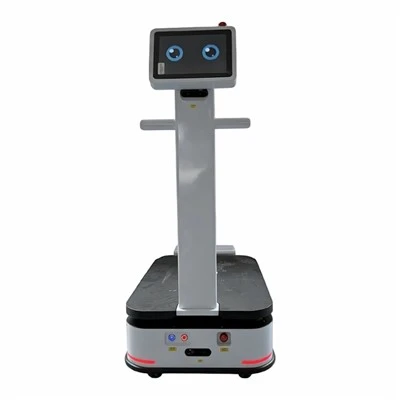
Let me start with a story that sticks with me. A automotive parts manufacturer in the Midwest came to me three years ago, frustrated because their AGVs were stuck in a silo. They had a fleet of 20 AGVs moving raw steel coils from the loading dock to the stamping department, but the stamping line was operated on an old SCADA system that couldn’t talk to their new AGV management software. The result? AGVs would show up with coils, but the line wasn’t ready for them, so they’d have to wait in a designated holding area—wasting time, taking up space, and creating bottlenecks. The plant manager told me, “We bought these AGVs to fix our material flow, and now they’re making it worse.” That’s when I realized: AGVs aren’t just vehicles—they’re nodes in a larger network, and if they can’t communicate with the systems that run a facility, they’re not adding value. Now, every AGV we supply is designed with integration as a core feature, not an afterthought.
So, what does integration with other systems actually look like for AGVs? Let’s break it down into the most common, impactful connections. First, there’s integration with Warehouse Management Systems (WMS) or Enterprise Resource Planning (ERP) software. These are the brain of any operation—they track inventory, manage orders, and plan workflows. When an AGV is connected to a WMS, it doesn’t just follow pre-programmed routes; it receives real-time tasks based on the system’s current needs. For example, if a WMS identifies that an order for 50 boxes of electronics needs to be picked from the north warehouse at 2 PM, it sends that task directly to the AGV fleet. The closest available AGV navigates to the picking station, collects the boxes, and delivers them to the shipping dock—all without any human intervention. This isn’t just convenience; it reduces order fulfillment time by up to 30% in many cases, according to recent industry data.
Another critical integration is with manufacturing execution systems (MES). For factories, this is where AGVs really shine. Take that same automotive parts client I mentioned earlier—after we integrated their AGVs with their MES, we fixed the coil bottleneck. The MES tracks the stamping line’s production schedule: when a new coil is needed, it sends a signal to the AGV system, which immediately dispatches an AGV to pick up the next coil from the warehouse. The AGV even adjusts its route in real time if there’s a delay in the stamping line—say, a machine breakdown—so it doesn’t show up with an unwanted coil. The plant’s productivity jumped 18% in the first six months, and the stamping line’s downtime from material shortages dropped to zero. That’s the power of AGVs working in sync, not in isolation.
We also see strong value in integrating AGVs with IoT sensors and other automation tools. For example, many of our clients use AGVs alongside conveyor systems, robotic arms, and even autonomous mobile robots (AMRs) that handle different tasks. When an AGV approaches a conveyor, it can communicate with the conveyor’s control system to synchronize loading and unloading. No more misaligned pallets or items falling off because the conveyor started too early. In one food and beverage facility, we integrated AGVs with temperature sensors that track the location of refrigerated ingredients. If a sensor detects that a pallet of frozen vegetables is at risk of warming up, it sends an alert to the WMS, which reroutes an AGV to move that pallet to a colder storage area—preventing thousands of dollars in product loss.
But integration isn’t just about connecting to digital systems; it’s also about adaptability. A few years ago, we worked with a 3PL (third-party logistics) provider that had a rapidly growing client base, so their warehouse layout changed every few months. Their original AGVs couldn’t adjust to these changes because they were tied to a rigid, on-premise management system. We switched them to a cloud-based AGV management platform that integrates with their WMS, and now when they rearrange storage areas, they don’t have to re-program every AGV. The system automatically updates the routes based on the WMS’s inventory data and the AGVs’ real-time location. This has cut their setup time for new clients by 40% and made their entire operation much more flexible.
Of course, I know that skepticism exists. Some operations managers tell me, “Our systems are from different vendors—how can they talk to each other?” It’s a valid concern, but the technology to solve this is well-established now. APIs (Application Programming Interfaces), middleware platforms, and standardized protocols like MQTT and OPC UA make it possible for different systems to communicate, regardless of who built them. When we supply AGVs, we don’t just hand over a machine and say “good luck.” Our team works closely with the client’s IT department (or our own in-house integration specialists) to map out their existing systems, identify what connections are needed, and build a custom integration that fits their unique setup. We recently completed a project where we integrated our AGVs with a legacy ERP system from the early 2000s—something most vendors would have said was impossible. It took a bit more time and effort, but the client now has a seamless material flow that’s far beyond what they thought they could achieve.
Another point I often emphasize is data sharing. When AGVs are integrated with other systems, they generate a wealth of data that can be used to improve the entire operation. For example, if AGVs are connected to WMS and ERP, the data on how long it takes to move materials between departments, how often certain tasks are performed, and where bottlenecks occur can be analyzed to optimize workflows. We recently helped a client use this data to rearrange their warehouse’s picking zones, cutting AGV travel time by 22%. The AGVs told them exactly where the inefficiencies were—they just had to listen. This is why we include basic data analytics tools with every integrated AGV system; it’s not just about moving materials, it’s about making smarter decisions.
But integration does come with challenges, and I don’t sugarcoat that. One common hurdle is change management. Employees who’ve worked in a facility for years might be used to certain processes, and introducing AGVs that talk to other systems can feel intimidating. I always make sure to stress that AGVs are meant to augment, not replace, workers. For example, when an AGV is integrated with a WMS to pick orders, the human worker is still there to verify that the right items are picked, handle exceptions, and perform tasks that require decision-making. We also provide extensive training—both for IT teams and frontline workers—to make sure everyone is comfortable with the new system. At that automotive parts plant, the line workers were initially worried that AGVs would take their jobs. Six months after integration, they were the ones who suggested adding a secondary task: using the AGV data to flag when a machine needed maintenance before it broke down. That’s the kind of collaboration that makes integration successful.
As an AGV supplier, I’ve seen firsthand that the future of material handling isn’t just about more advanced AGVs—it’s about AGVs that work with every other part of a supply chain. A standalone AGV can handle one task well, but an integrated AGV fleet can transform an entire operation. Whether it’s connecting to a WMS to optimize inventory, linking to an MES to sync with production, or working with IoT sensors to reduce waste, integration is what turns a group of vehicles into a smart, efficient system.
If you’re considering adding AGVs to your operation, or if your current AGVs feel disconnected from the rest of your systems, I encourage you to think beyond just the vehicle. Ask about integration capabilities. Ask how the AGV management platform will work with your existing software. Ask about data sharing and training. At the end of the day, the goal isn’t just to have AGVs—it’s to have a material handling system that supports your business goals, whatever they are: faster order fulfillment, lower costs, fewer errors, or more flexibility as your business grows.

I’ve spent years working with these machines, and I can tell you that the best AGV is not the fastest, or the most expensive, or the most high-tech. It’s the one that fits seamlessly into your operation, communicates with the systems you already use, and helps you run your business better. If you’re ready to explore how integrated AGVs can make a difference for your facility, we’re here to help. Our team will work with you to understand your needs, design a custom integration solution, and support you every step of the way.
Automated Guided Vehicle References
- Material Handling Industry of America. (2022). AGV Integration: Key to Modern Supply Chain Efficiency. MHI Annual Industry Report.
- Robotic Industries Association. (2021). Integrated Automation: AGVs and Connected Systems. RIA Technical White Paper.
- International Society of Automation. (2023). Protocols for Industrial System Integration: OPC UA and MQTT. ISA Standards and Guidelines.
- Logistics Management. (2022). How WMS-AGV Integration Reduces Warehouse Bottlenecks. Logistics Management Magazine, Vol. 41, No. 5.
- Manufacturing Engineering. (2023). AGV-MES Integration Driving Productivity Gains in Automotive Manufacturing. Society of Manufacturing Engineers Journal.
Shenzhen Ginnee Intelligent Warehousing Robotics Co., Ltd.
As one of the most professional automated guided vehicle suppliers in China, we’re featured by quality products and low price. Please rest assured to wholesale durable automated guided vehicle in stock here and get quotation from our factory. We also accept customized orders.
Address: Room101, No.162 JunXin Road, Niuhu Community, Guanlan Strect, Longhua District, Shenzhen, Guangdong Province, China.
E-mail: huangyongmei@szginnee.com
WebSite: https://www.ginneerobotics.com/
