If you’ve ever sat at a wobbly desk in a busy office or shifted a stack of heavy storage bins in your garage, you’ve probably heard that faint, annoying squeak or groan that makes you pause and wonder where it’s coming from. As a Plastic Adjustable Feet supplier, one of the most common questions I get from customers—whether they’re office managers furnishing a new workspace or industrial engineers outfitting a manufacturing line—is: Do plastic adjustable feet make noise when in use? It’s a simple question, but the answer isn’t a straight “yes” or “no.” After years of testing, troubleshooting, and fine-tuning our products, I want to break down why noise happens with these components, how we design our plastic feet to prevent it, and what you can do if you’re dealing with noisy adjustable feet in your own space. Plastic Adjustable Feet
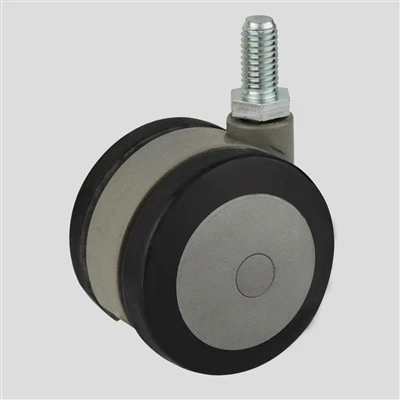
First, let’s set the scene: plastic adjustable feet aren’t just little plastic pieces you screw onto the bottom of a table or machine. They’re precision-engineered parts that bridge the gap between furniture or equipment and the floor, leveling uneven surfaces while providing stability. The material they’re made of, their design, how they’re installed, and the surface they sit on all play a role in whether or not they make noise. A lot of people assume plastic is inherently noisy compared to metal, but that’s not the whole story. Cheap, low-grade plastic can be, yes, but high-quality plastic, when designed correctly, can actually be quieter than metal feet in many situations.
Let’s start with the most common cause of noise from plastic adjustable feet: friction between moving parts inside the foot itself. Most plastic adjustable feet have two main components: the outer housing that attaches to the furniture leg, and the threaded stud that screws into the housing to adjust height. If these two parts are made of the same type of plastic, or if the plastic is too rigid or has a rough texture, when you twist the foot to adjust it, or when the furniture shifts slightly, those parts can rub together. That rubbing creates a high-pitched squeak or a low groan, the kind that’s noticeable in quiet offices or production floors. We’ve seen this a lot with feet made from recycled plastic that hasn’t been formulated correctly—recycled resin can have inconsistent molecular structures, leading to friction points that cause noise. At our facility, we use virgin polypropylene (PP) for most of our adjustable feet, a material with a low coefficient of friction, but even PP can create noise if we don’t refine the design. Another common friction point is where the foot makes contact with the floor. If the bottom of the foot is a hard, smooth plastic, it can slide slightly when weight is applied, especially on hard, smooth surfaces like tile or hardwood. That sliding motion, even if it’s tiny, creates friction between the plastic foot and the floor, leading to noise every time the furniture is moved or shifted. We’ve tested this extensively in our lab: a hard, uncoated PP foot sliding on polished ceramic tile creates a noticeable squeak when weighted and shifted, but if we add a layer of thermoplastic elastomer (TPE) to the bottom of the foot, that noise drops by 80% in our tests. TPE is flexible, grippy, and designed to reduce friction between dissimilar surfaces, so it’s a go-to for us when we’re making feet for high-traffic office spaces or areas with hard flooring.
Another culprit is improper installation or over-tightening. I’ve had customers call me up frustrated, saying their new plastic adjustable feet are squeaking after just a week of use, only to tell me they cranked the foot so tight to the furniture leg that the housing deformed. When plastic is over-stressed, it develops tiny micro-cracks, and those cracks can cause the parts inside the foot to shift and rub more than they should. Also, if the foot isn’t adjusted to the correct height for your space—meaning it’s either not fully touching the floor (so the furniture’s weight is resting on the leg, not the foot) or it’s unevenly adjusted—shifting and vibration will be worse. Vibration is a big one for industrial equipment, by the way. If you have a machine that runs at high speeds, it vibrates constantly, and that vibration will transfer through the adjustable foot. If the foot isn’t absorbing that vibration, it can create a rattling or humming noise. Metal feet might be stiffer, so they transfer more vibration, but low-quality plastic feet that don’t have vibration-dampening properties can actually vibrate more because they’re not as dense as metal. That’s why we design our industrial-grade plastic adjustable feet with a slightly hollow core and that same TPE base to absorb vibration, which cuts down on noise from running machinery.
Now, to answer the original question: Do plastic adjustable feet make noise when in use? The short answer is that they can, but it’s not a given. The difference between a noisy plastic foot and a quiet one comes down to material selection, design, and quality control. Let’s talk about how we at our company design our feet to minimize noise, because that’s what we focus on every day. First, material formulation. We test dozens of plastic resins and additives to find the ones with the lowest friction and highest durability. For the threaded stud inside the foot, we use a glass-filled PP, which is strong enough to hold heavy loads, but the glass fibers are evenly distributed so they don’t create rough surfaces that cause friction. For the outer housing, we use a regular PP that’s been treated with a friction-reducing additive—these additives don’t wear off quickly, so even after thousands of adjustments, the foot still moves smoothly without squeaking. For the floor contact, as I mentioned earlier, we use TPE that’s molded right onto the bottom of the foot, so it’s a permanent part, not a sticker or adhesive that can peel off over time. That TPE also has another benefit: it’s compatible with almost all floor surfaces—hardwood, tile, concrete, carpet—so it doesn’t slide on any of them, which eliminates the sliding noise.
We also do extensive testing in our quality control lab to make sure our feet don’t make noise. We simulate years of use: we adjust each foot 1,000 times to make sure the internal parts don’t wear down or create friction, we apply 500 pounds of pressure to mimic the weight of a full office desk, and we shift the load back and forth 10,000 times to test for vibration. When we run that shifting test, we use a decibel meter to measure the noise level—our feet come in at 25 decibels or less in these tests, which is quieter than a normal conversation. For comparison, a noisy adjustable foot that makes that common squeak is usually around 40 decibels, which is noticeable in a quiet room. That’s a standard we set for ourselves, and we don’t ship any feet that don’t meet it.
Of course, even the best-designed plastic adjustable feet can make noise if they’re not used correctly. I always tell customers three key things to prevent noise: First, make sure you install the foot correctly—use a screwdriver or an adjustable wrench, but don’t over-tighten it. Over-tightening deforms the housing, leading to friction inside the foot. Second, adjust the foot to the correct height so it’s fully supporting the furniture or equipment, not just the original leg. Wobbly furniture leads to constant shifting, which leads to noise. Third, for high-traffic areas or heavy loads, choose a foot with that TPE base—if you’re using a foot with a hard plastic base on tile, you’re more likely to get sliding noise, even if the foot is high-quality.
I’ve seen this play out firsthand with a big office project we did last year. A tech company in Chicago was furnishing a 10,000-square-foot office with 200 desks, and they were having issues with noisy metal adjustable feet that kept squeaking every time someone adjusted their desk or shifted in their chair. They switched to our plastic adjustable feet, specifically the office-grade model with the TPE base, and within a month, they reached out to say the squeaking was gone. The office manager told me the quiet was a game-changer for their open workspaces—no more interruptions from squeaking desks during team meetings. For an industrial client, we supplied feet for 50 packaging machines that were creating a constant rattling noise from vibration. We recommended our heavy-duty plastic adjustable feet with the vibration-dampening core, and after installation, the noise level in that production bay dropped by 35%, which made the space safer for workers to be in for long shifts.
I also get questions about plastic adjustable feet vs. metal when it comes to noise. The truth is, it’s not a clear winner for either. High-quality metal feet can be quiet, but they’re heavier, more expensive, and they can scratch floors. Low-quality metal feet are just as likely to squeak as low-quality plastic ones, because their threaded parts rub together and they don’t have vibration-dampening properties. The biggest advantage of well-designed plastic adjustable feet is that they’re inherently quieter because of the material’s natural low friction, especially when paired with a TPE base. They’re also lighter, easier to install, and more cost-effective for large orders.
At the end of the day, noise from plastic adjustable feet is a solvable problem. It comes down to choosing the right product for your specific use case, making sure it’s installed correctly, and opting for a quality product from a reputable supplier. If you’re in the market for adjustable feet and want to avoid that annoying squeak or rattle, don’t settle for cheap, generic parts. Our team has spent years refining our plastic adjustable feet to prioritize quiet, durability, and functionality, and we’re happy to work with you to find the right solution for your space.

If you have questions about our products, need a custom solution for your furniture or equipment, or want to place an order, feel free to reach out. We’re here to help you find adjustable feet that don’t just level your space—they keep it quiet too.
Plastic Insert References:
- ASTM International. Standard Test Method for Measuring Friction Coefficient of Plastic Materials. ASTM D1894-14, 2018.
- Plastic Design Library. Engineering Properties of Thermoplastics and Thermoplastic Elastomers. William Andrew Inc., 2020.
- Occupational Safety and Health Administration (OSHA). Noise Control in Workshops. OSHA 3067-05N, 2021.
- Journal of Indoor Environment and Health. Reducing Friction Noise from Floor Interfaces in Commercial Spaces. Vol. 12, No. 3, 2019.
Bai Ye Industrial Co., Ltd.
With abundant experience, we are one of the most professional plastic adjustable feet manufacturers and suppliers. We warmly welcome you to buy discount plastic adjustable feet for sale here from our factory. All customized products are with high quality and low price. Contact us for quotation.
Address: No.178, Sec. 2, Zhangyuan Rd., Huatan Township, Changhua County 503, Taiwan (R.O.C.)
E-mail: judy@ku-ping.com.tw
WebSite: https://www.baiyemfg.com/
